


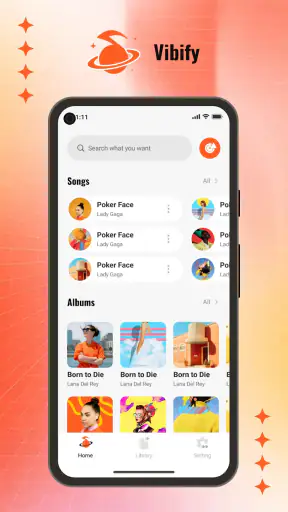
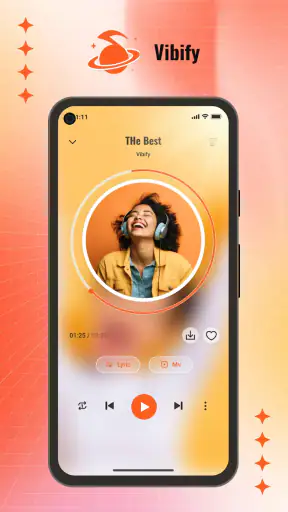
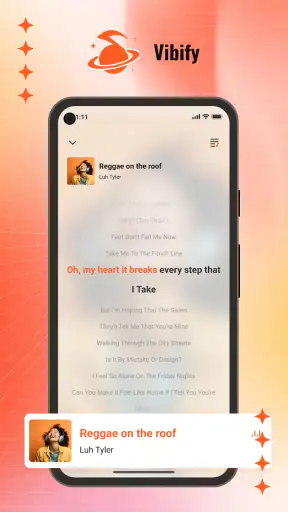
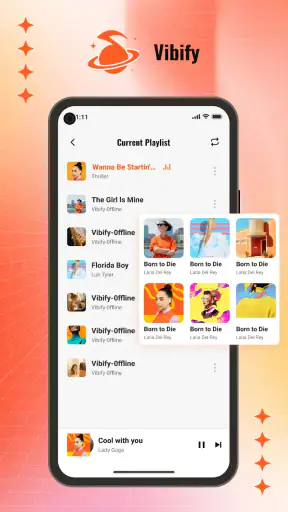
I installed Vibify-offline MP3 expecting a straightforward way to turn music already on my phone into something more useful during ordinary parts of the day. That expectation matters, because this is not the kind of music app I would choose for discovering artists, following social trends, or replacing a full streaming service. It sits in the more practical side of Music & Audio: a free app from Khan eCoding built around the idea of making personal listening fit the moment.
My first impression was that Vibify is easiest to understand when I treat it as a companion for music I already have available locally. The store summary, “Turn Every Moment into Music,” is broad, while the short description simply calls it “Vibify.” In daily use, the useful question is more specific: do I want a lightweight tool for offline MP3 listening and mood-based moments, or do I need a complete music library with discovery, recommendations, and cloud access? For the first situation, it has a clear appeal. For the second, its limits become important very quickly.
From a quiet starting point to a usable listening routine
The most realistic starting condition is a phone with MP3 files already stored on it and a listener who wants to play them without depending on a data connection. I can imagine using it before a commute, while doing chores, or when I want familiar tracks rather than an endless recommendation feed. That makes the app particularly relevant for people who keep their own music collection, prefer predictable playback, or want to avoid using streaming data for songs they have already saved.
Vibify is free, carries an Everyone content rating, and supports devices running Android 7.0 or later. Those details make it approachable for a wide range of Android users, including people using an older phone rather than a recent flagship. It has also reached more than five million installs and holds an average rating of 4.1 from roughly three thousand ratings, which suggests that the basic idea is connecting with a substantial audience without making it universally loved.
I would not approach it as a replacement for Spotify, YouTube Music, Apple Music, or a similar streaming platform. Those services are better when the starting point is “I want to find something new.” Vibify makes more sense when the starting point is “I already know what I want to hear, and I want a simple offline route to it.” That distinction prevents disappointment and helps explain where its value lies.
What I would prepare before opening it
The quality of the experience depends heavily on the state of the music collection before playback begins. If the phone contains clearly named MP3 files, the transition into listening should feel much more natural than it would with a disorganized folder full of duplicate downloads and vague filenames. I found that a few minutes spent cleaning up the collection is more useful than expecting the app to solve every organization problem automatically.
My practical preparation would be to remove obvious duplicates, use consistent artist and track names, and separate music from unrelated audio such as voice recordings or notification sounds. This is one of the less obvious trade-offs of an offline player: it can be wonderfully dependable once the local library is tidy, but it cannot offer the same effortless catalog management as a streaming service that maintains its own database.
That preparation also changes how I think about the app’s “offline” promise. Offline listening is convenient only after the content is already on the device. Vibify is not a shortcut around obtaining music legally, and it should not be treated as one. Its role begins with available MP3 files and ends with making those files easier to use in a listening routine.
The first pass through the library
On the first pass, I would focus less on judging visual polish and more on whether the app helps me reach a track without unnecessary searching. A useful offline player should reduce the distance between opening the app and pressing play. If my collection is small, browsing may be enough. If it is larger, naming and grouping become central to the experience rather than minor housekeeping.
This is where Vibify’s simplicity can work in its favor. I do not need a recommendation engine to play a folder of albums for a long drive, and I do not want a stream of unfamiliar suggestions when I have deliberately chosen offline music. The trade-off is that the app’s usefulness is tied to my own preparation. It gives me a listening path, not an automatically curated musical world.
A good habit is to create a small “ready to play” selection before leaving home. I would choose tracks for a particular activity rather than relying on the entire collection every time. A compact group for exercise, another for concentration, and another for travel can make a local player feel much more intentional. Even without treating the app as a full playlist ecosystem, this workflow reduces browsing and keeps the outcome predictable.
Moving from selection to playback
Once I have chosen the music, the central handoff is simple: the files move from being passive storage on the phone to becoming the soundtrack for a specific moment. This is the point where Vibify’s offline focus feels most useful. I can start with a known collection instead of waiting for a network connection or dealing with changing recommendations.
For a realistic everyday scenario, imagine preparing breakfast before leaving for work. I select a short group of familiar MP3 tracks, begin playback, and put the phone aside while I finish getting ready. The value is not dramatic; it is the absence of interruption. I am not searching for an album, comparing subscription catalogs, or worrying about whether a signal will hold. The app earns its place by making a small routine less dependent on outside services.
The same workflow suits travel, but with an important precaution: I would test the selected music before the journey rather than discovering at the station that a file is missing, mislabeled, or not the version I expected. Offline tools reward preparation. That is both their strength and their responsibility.
How the handoffs feel in real use
From phone storage to a personal listening space
The first handoff is between the Android file system and the app’s music view. This is where many local players either feel immediately comfortable or become frustrating. A listener should not have to think like a file manager every time they want an album. Vibify is most convincing when it keeps that technical background out of the way and lets the collection feel like music rather than a set of folders.
Still, I would keep expectations realistic. Local audio apps often expose the condition of the underlying files more directly than streaming services do. An incorrectly named track, an incomplete download, or an album split across folders can make the library feel inconsistent. That is not necessarily a defect unique to Vibify, but it affects the app’s practical result and is worth considering before blaming the player for a messy collection.
My advice is to start with a small, well-organized batch instead of importing or relying on an entire chaotic archive at once. That gives me a clearer sense of how the app presents music and makes it easier to identify whether the friction comes from the application or from the files themselves. It is a simple diagnostic step that saves time.
From a chosen track to the surrounding moment
The second handoff is more personal: the selected music has to match the activity. This is where the “vibe” idea becomes practical rather than decorative. The same collection can work differently depending on whether I need background sound, a familiar mood, or focused listening. Vibify is better suited to deliberate choices than to constantly changing discovery.
For concentration, I would avoid mixing spoken recordings with music unless that is intentional. For a walk, I might choose a sequence with a consistent energy level. For a shared room, I would prepare a selection that does not require me to keep touching the phone. These are small workflow decisions, but they reveal the app’s strongest quality: it can support a personal routine when I decide the input and the desired outcome in advance.
This also explains who should skip it. If I want automatic mood classification, a huge searchable catalog, synchronized listening across several devices, or recommendations based on listening history, I would be happier with a mainstream streaming service. Vibify is not the right choice merely because it contains the word “offline” in its identity. It is the right choice when local control matters more than catalog breadth.
From playback to another device or activity
The next handoff is the point at which expectations can become too ambitious. Many people now move between phones, tablets, cars, speakers, and computers without thinking about where their music is stored. A local MP3 app begins with content on one device, so it naturally feels less seamless than a cloud-based service. I would choose Vibify for a single-device routine first, then judge whether it fits a more complicated setup.
That matters for families and for people who switch devices frequently. A streaming service may be more convenient when the same library needs to follow the user across platforms. Vibify’s advantage is control over local playback, not automatic continuity everywhere. If my priority is ownership of a personal file collection and dependable access on one Android phone, that trade-off may be worthwhile. If my priority is effortless handoff between devices, it probably is not.
A useful habit for avoiding interruptions
One practical habit I would adopt is a pre-trip check: open the app, play the first and last track in the intended selection, and confirm that the phone has enough battery for the activity. This sounds obvious, but offline listening is often chosen precisely for situations where troubleshooting is inconvenient. A short check catches many problems before a flight, workout, or long commute begins.
I would also keep the listening collection smaller than the total archive. A giant library can create choice fatigue, while a focused selection makes the app feel faster and more purposeful. This is not a claim about a hidden feature; it is a workflow improvement that matches the app’s local-first character. The less time I spend navigating storage, the more the experience resembles a finished music routine.
What the finished result is actually like
The result I get from Vibify is not musical discovery; it is reduced dependence on discovery. I open the app with a clear intention, choose from music that is already available, and let the phone provide a consistent soundtrack. That is a modest outcome, but it can be exactly what I need when connectivity is unreliable, data use matters, or I simply do not want another service deciding what comes next.
For listeners with a carefully maintained MP3 collection, the app can feel more direct than a streaming platform. I know where the music came from, I know which versions I saved, and I am not navigating a changing catalog. That control is especially valuable for personal recordings, older albums, or tracks that are not always easy to find on streaming services.
For someone with only a few files and no interest in organizing them, the result may be less impressive. The app cannot create a rich listening experience from an empty or poorly prepared library. In that situation, a streaming service with search and recommendations will likely deliver more immediate value, even if it introduces subscriptions, network dependence, or a less personal sense of ownership.
How it compares with familiar alternatives
Compared with a streaming app, Vibify gives up catalog size and discovery in exchange for local control and offline independence. Streaming is better for exploring an artist, building a collection from recommendations, or keeping music synchronized across devices. Vibify is better when I already have the tracks and want the listening experience to stay close to those files.
Compared with a basic file manager, it offers a more music-focused route into the collection. A file manager can locate an MP3, but it is not designed around the rhythm of choosing music and continuing playback. That said, someone who only plays an occasional file may not need a dedicated music app at all. Vibify becomes easier to justify as the listening habit becomes regular.
Compared with a more advanced local player, the deciding factor is likely to be how much control I expect. Enthusiasts who want deep library rules, extensive audio tools, or highly specialized playback behavior may prefer an app designed around those priorities. Vibify is more approachable for the person who wants offline MP3 listening without turning music management into a technical project.
Who gets the most from it
I would recommend trying it if you keep MP3 files on an Android phone, travel through places with unreliable connectivity, or prefer familiar music over algorithmic suggestions. It also suits listeners who want a free starting point and do not need a large online catalog. The Everyone rating makes it suitable for a broad audience, although the best fit still depends on listening habits rather than age alone.
It is also a reasonable option for someone moving away from constant streaming. The transition works best if the listener is willing to spend a little time preparing files and selections. That small investment creates a calmer experience later, especially during commutes or activities where reaching for the phone is inconvenient.
I would skip it if my music life revolves around online search, new-release discovery, shared playlists, or seamless movement between several devices. I would also hesitate if I do not already have local music and do not want to manage files. In those cases, the usual streaming alternatives solve the starting problem more directly.
Where the flow breaks down
The main weakness is that the workflow can break before playback even begins. If the music collection is scattered, poorly named, or incomplete, the app inherits that disorder. A listener expecting the polish of a streaming catalog may find the local approach demanding. The free price is attractive, but it does not remove the work involved in maintaining the content itself.
Another point of friction is the boundary between a single-device tool and a broader music ecosystem. Local files are convenient on the phone where they live, but they do not automatically create the same continuity as a cloud account. This makes Vibify less suitable for people whose routine depends on changing devices or sharing a library.
The app’s relatively recent release, on Jul 11, 2025, also places it in an early stage of its life compared with long-established music platforms. Its current version is 1.3.5, and I would keep that version current through the normal app-store process so the experience benefits from ongoing maintenance. I would not choose it on the assumption that it already matches every mature alternative feature for feature.
Finally, the average rating of 4.1 from around three thousand ratings is encouraging but not a guarantee that every phone or library will feel identical. Local music experiences are unusually sensitive to file organization and personal expectations. I would treat the rating as a useful signal that many people find the app worthwhile, while still testing it with the exact MP3 collection and daily routine I care about.
My recommendation after following the full workflow
Vibify works best when I begin with a clear local collection, prepare a focused selection, start playback before the moment becomes inconvenient, and accept that the app is a personal offline player rather than a universal music platform. That complete workflow is its real strength: it turns music already on the phone into a dependable part of a routine without asking me to search the internet every time.
My honest recommendation is to try it if offline MP3 listening is the problem I am actually trying to solve. I would not install it expecting streaming-style discovery, cloud convenience, or a replacement for every music service. For the right listener, its free access, broad device compatibility, and straightforward offline purpose make it a sensible addition to an Android phone. For everyone else, especially people who want a constantly expanding catalog, a different kind of music app will be the better fit.


